How to tell real red palm oil from blended oil
A short home test anyone can run with a spoon, a clear glass and ten minutes.
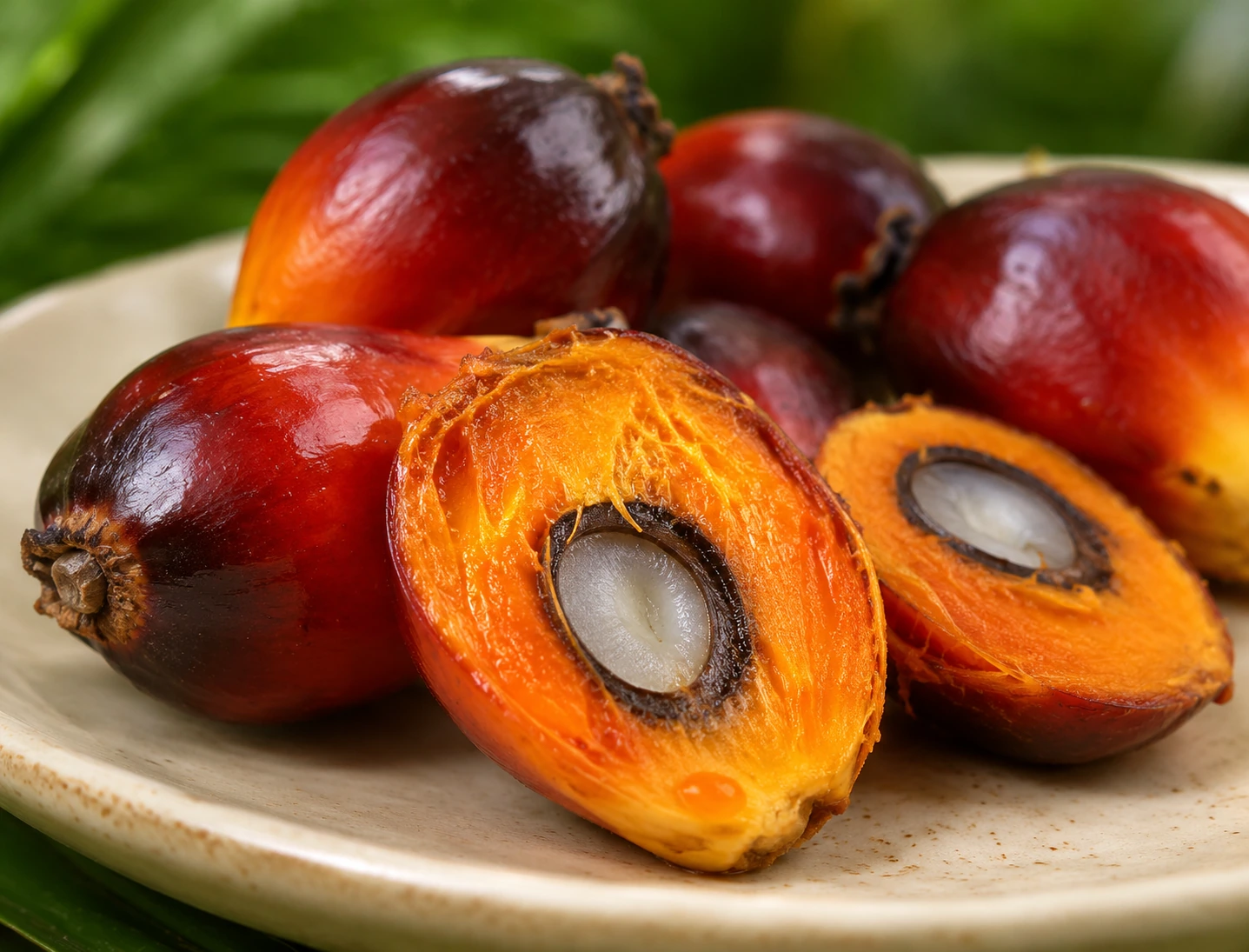
Most of the red oil sold in open markets is not pure. It is palm oil thinned with cheaper vegetable oil, or stripped with heat so it keeps longer on the shelf. The colour still looks red, but the oil behaves differently once it hits the pot.
Here is the test we use at the mill. It takes about ten minutes.
1. The cold glass test
Pour two tablespoons of oil into a clear glass and put it in the fridge for thirty minutes. Real red palm oil solidifies into a thick orange-red paste. Blended oil stays liquid in the middle with a thin red layer on top, or separates into two colours. Separation means it has been cut with another oil.
2. The frying test
Heat a dry pan on medium and add a teaspoon of the oil. Real red palm oil stays red and smells gently of fruit. Oil that has been diluted or dyed turns pale yellow or brown within a minute and smells closer to groundnut or soy oil.
3. The pot test
Cook a small portion of your usual stew with it. Real red palm oil keeps its colour in the finished dish, holds the spice without becoming greasy, and sets into a soft sheen on top as it cools. Blended oil gives a watery film and a muted colour.
If you want to skip the tests, a trustworthy mill will show you the batch it came from and tell you what farm it was pressed from. That information is on the Dynoil label.
Want to try the oil the article is about?
Dynoil red palm oil, milled in Nigeria. Ten pack sizes, one price list.