What is actually in a bottle of red palm oil
A plain-English look at the fats, the colour and what it does in the body.
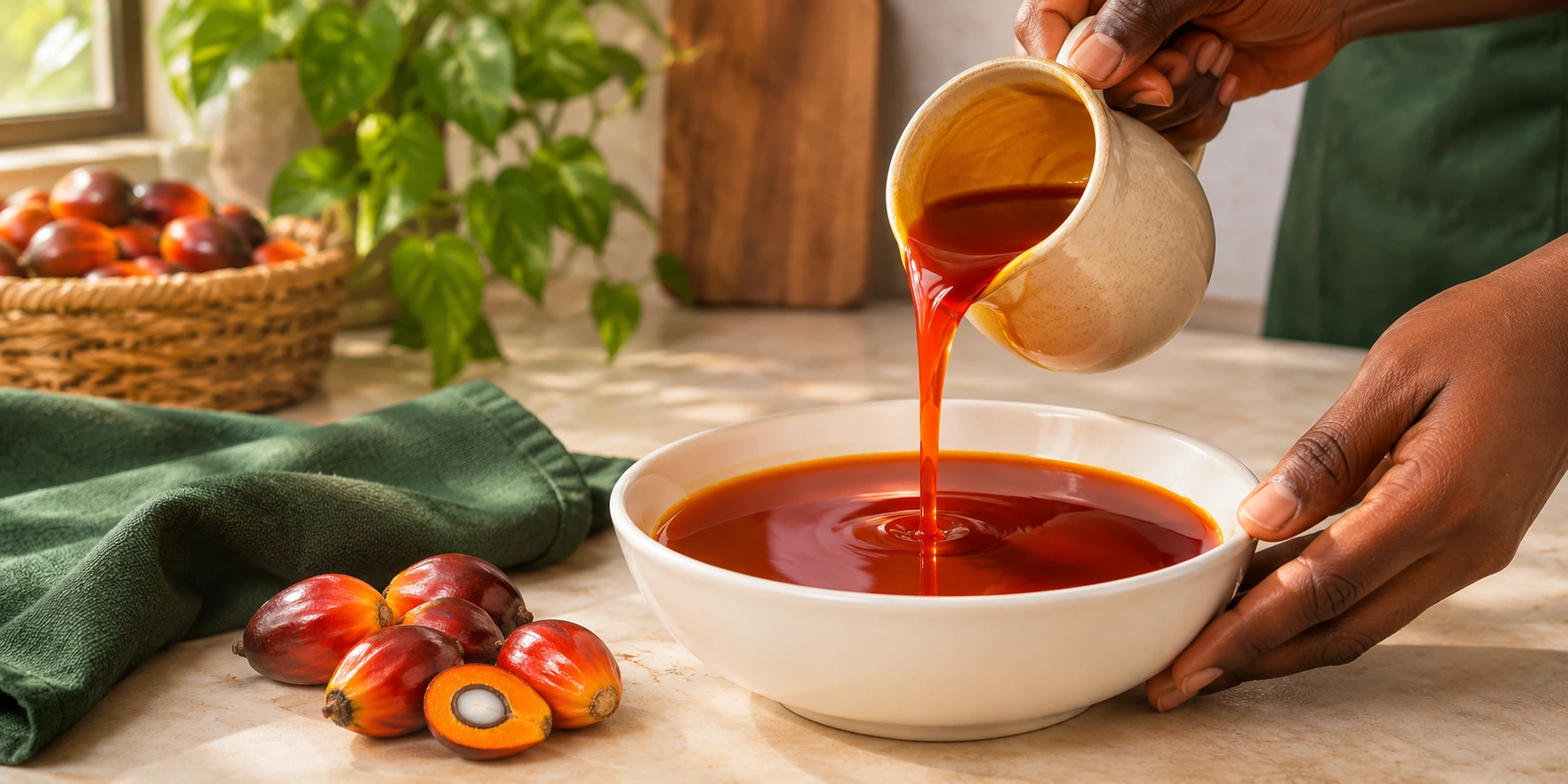
Most of the writing online about palm oil is about either plantations or politics. This is a short note on what is actually in the bottle.
The fats
Red palm oil is roughly half saturated and half unsaturated by weight. The saturated portion is mostly palmitic acid, and the unsaturated portion is mostly oleic acid, the same fat that makes up the bulk of olive oil. The balance is what makes it stable at cooking temperatures without turning rancid quickly.
The colour
The red colour comes from carotenes, the pigment family that includes beta-carotene. Carotene is the raw material the body uses to make vitamin A, which is why red palm oil appears in some nutrition programmes as a food-based source of it. The amount varies by batch and by how the oil was processed; unrefined oil keeps the most, bleached and deodorised oil keeps the least.
Vitamin E
Red palm oil also carries natural vitamin E compounds (tocotrienols), which is one reason the oil keeps for months on a shelf without added preservatives.
What is not in it
A good red palm oil has no additives, no dye, no bleach, no deodorising solvents. If the label lists any of those, it is a refined oil, which is a different product. A short ingredient line that just reads "red palm oil" is what to look for.
How much to use
For most Nigerian dishes a third to half a cup for a family-size pot is the usual amount. More than that and the flavour tips from supporting the dish to dominating it.
Want to try the oil the article is about?
Dynoil red palm oil, milled in Nigeria. Ten pack sizes, one price list.