Why real red palm oil keeps its colour in the pot
A short explanation of carotenes, heat and what actually goes on in the pan.
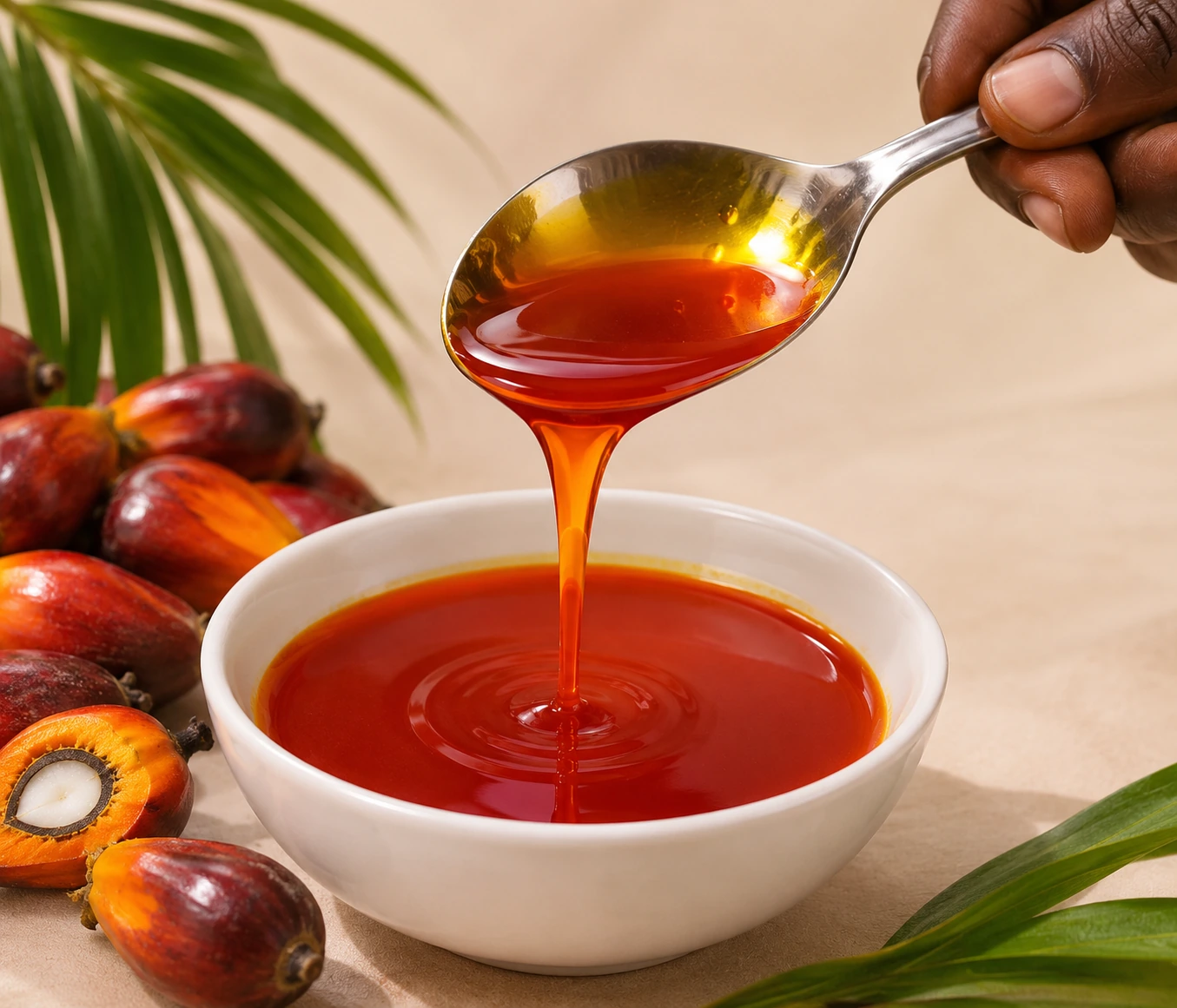
The red in red palm oil is not a dye. It is a pigment called carotene, the same family of compounds that makes carrots orange and tomatoes red. Carotene is fat-soluble, so it lives naturally in the oil the fruit produces.
How the colour gets lost
Two things destroy carotene: high heat for long periods, and chemical bleaching. Industrial refiners do both to make a neutral oil they can sell as a frying medium. What comes out the other end is a pale yellow oil that is cheaper to produce and lasts longer in a warehouse. The colour is gone because the carotene is gone.
Why cheap "red" oil goes pale
When a supplier bleaches the oil and then adds a cheap red dye to make it look traditional, the dye is water-soluble. Cook it in a hot pepper sauce and the dye breaks down, which is why the stew turns brown within ten minutes. The pigment is in the dye, not the oil.
Why Dynoil's oil stays red
Our oil is pressed, settled and filtered. No bleaching, no added dye, no chemical refining. The carotene stays in the bottle, which means it stays in the pot, which means your stew looks the way it is supposed to look. There is nothing more clever than that.
A side note: the carotene is also why pure red palm oil is a source of vitamin A. The amount depends on the batch, but it is one of the few cooking oils that carries any at all.
Want to try the oil the article is about?
Dynoil red palm oil, milled in Nigeria. Ten pack sizes, one price list.